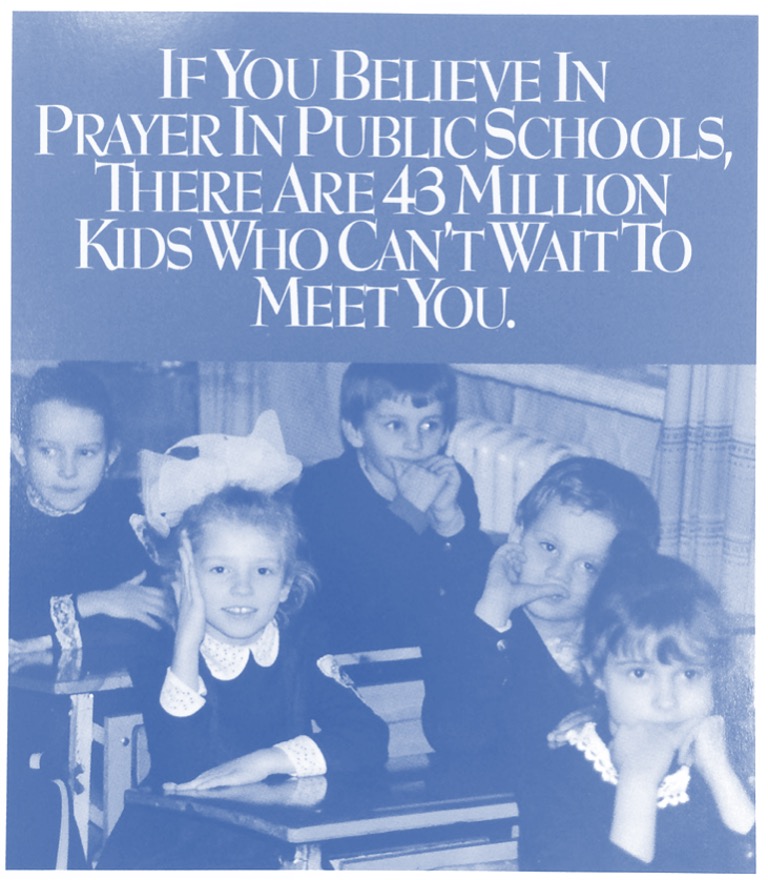
“Putting an American God into Public Schools around the World: The Transnational 1990s History of a U.S. Culture War,” Diplomatic History 46.4 (September 2022): 701-27 = available online
In the 1990s, a coalition of U.S. evangelical organizations launched a campaign to save souls in the former Soviet Union by proselytizing in public schools. This project, called the CoMission, retrofitted foreign public institutions for American evangelism and expanded U.S. evangelicals’ fight for prayer in schools into a global crusade. In only seven years, the campaign raised 70 million dollars, trained 42,000 public school teachers in 150 cities across 10 countries, and distributed 10 million pieces of evangelistic literature and films to over seven million schoolchildren in Russia and Eastern Europe. By internationalizing an American culture war, the campaign imposed abroad the framing that U.S. evangelicals were using at home while also reinforcing the idea that the U.S. culture war over schools was not complex, but simple – there were those who wanted God in schools, and there were those who opposed God. Inspiring widespread support and fierce opposition, the CoMission flattened multifaceted dynamics in the United States and the former USSR in the 1990s into a dualistic battle of good versus evil that combined the discourses of the Cold War with those of the U.S. culture wars. Assessing the methods and messages of the CoMission reveals how transnational religious activism linked American international influence and U.S. domestic activism in the late twentieth century.

“Missionary Positions: How American Evangelicals Learned to Love Global AIDS Work, 1985-2005,” American Quarterly 76.4 (December 2024): 821-844 = available online
– Winner, Berkshire Conference of Women Historians Article Prize for any field of history, 2025
From the mid-1980s to mid-2000s, American missionaries conducted information campaigns across the United States to change U.S. evangelicals’ perceptions of the AIDS epidemic and secure evangelicals’ support for global AIDS work. Drawing on longstanding colonial discourses about suffering foreign bodies and souls, missionaries conditioned U.S. evangelicals to shift their feelings about AIDS from disgust to grief, which activated practices of compassion. Evangelicals then funded abstinence-only sex education courses packaged as AIDS prevention programs across the Global South. Missionaries’ messaging facilitated U.S. evangelicals’ transformation in these decades from the most implacable foes of people with HIV/AIDS domestically to some of the biggest supporters of AIDS work internationally. Assessing U.S. evangelicals’ changing attitudes about and involvement with the AIDS epidemic reveals how transnational religious networks linked U.S. conservative political priorities to global health humanitarianism and how religious actors expanded American global power in a postcolonial context.
 Hannah R. Waits, PhD